


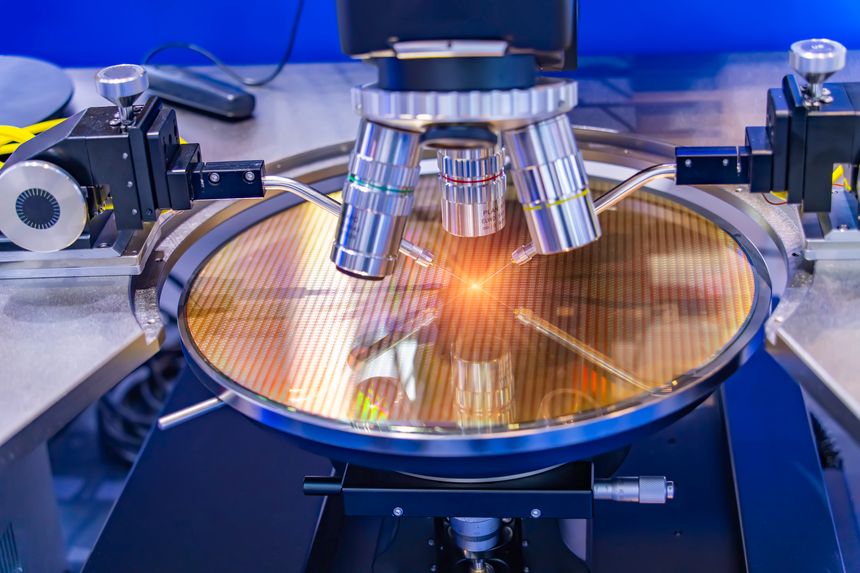
Semiconductor manufacturing equipment operates in some of the most demanding industrial environments in the world. These tools combine high energy, hazardous chemicals, advanced automation, precision motion, and continuous production expectations. That mix creates a simple reality: safety cannot be added at the end.
It has to be designed in from the start.
SEMI S2 has become one of the key benchmarks fabs use to assess whether equipment can be safely installed, operated, and maintained in a semiconductor fabrication facility. It is not just about checking individual components. It is about evaluating the tool as an integrated system.
SEMI S2 is about the whole equipment lifecycle
One of the strengths of SEMI S2 is its broad view of equipment safety.
SEMI S2 considers hazards that may appear during installation, operation, maintenance, abnormal conditions, and single-fault scenarios. These harzards include mechanical, electrical, chemical, fire, explosion, ergonomic, environmental, and control-system concerns.
This broad, fully encompassing scope of SEMI S2 is important to realize as semiconductor equipment is rarely simple. A tool may have chemical delivery systems, exhaust connections, moving assemblies, interlocks, software-controlled functions, and emergency shutdown behavior all interacting at once.
Each part may look acceptable on its own, but the real question is whether the system behaves safely when everything is integrated.
Interfaces are where risk often hides
SEMI S2 pushes manufacturers to think beyond isolated hazards. Electrical connections, gas delivery, exhaust routing, chemical handling, motion control, access panels, software behavior, and interlocks all have to work together safely under normal and fault conditions.
A maintenance task may require awkward access.
An exhaust condition may affect chemical safety.
A fault response may depend on both software logic and hardware interlocks.
The problems are rarely with an individual component, and instead the interaction between systems.
Why early planning matters
For equipment manufacturers, the best time to think about SEMI S2 is not during the final review, it's during the early tool design.
When SEMI S2 considerations are built in early, manufacturers can reduce the risk of redesign, avoid late-stage documentation gaps, and support smoother evaluation by third-parties and fabs.
That early planning should include clear consideration of:
- Hazard identification across the full tool lifecycle
- Chemical safety, exhaust, and emergency behavior
- Access, maintenance, ergonomics, and abnormal operating conditions
How Intertek can support
Intertek helps semiconductor equipment manufacturers evaluate equipment against SEMI S2 expectations and related safety requirements.
That support can include reviewing design documentation, assessing system-level hazards, evaluating electrical and mechanical safety, reviewing chemical and exhaust controls, and identifying potential gaps before equipment reaches the fab. Intertek also has very useful free webinars available for manufacturers who are new to the SEMI S2 evaluation requirements.
The goal is straightforward: help manufacturers build a stronger safety case before costly problems appear late in the process.
Final thought
SEMI S2 is not just a checklist, it's a way of thinking about semiconductor equipment as a complete system operating in a high-risk, high-reliability environment.
For manufacturers, the message is clear: the earlier safety is integrated into the design, the easier it becomes to demonstrate that the equipment is ready for the fab.
/Passle/5e4a7839abdfeb03584d01f6/MediaLibrary/Images/2026-03-31-21-45-54-751-69cc4092bd1f61a396ba5dbf.png)
/Passle/5e4a7839abdfeb03584d01f6/SearchServiceImages/2026-10-15-20-52-56-997-6ad13d285c647470665fe605.jpg)
/Passle/5e4a7839abdfeb03584d01f6/MediaLibrary/Images/2026-09-03-20-12-26-473-6a99d4aab11f9687508d5b0a.png)
/Passle/5e4a7839abdfeb03584d01f6/SearchServiceImages/2026-09-04-22-12-18-466-6a9b4242f67b2e9362bccbfa.jpg)