

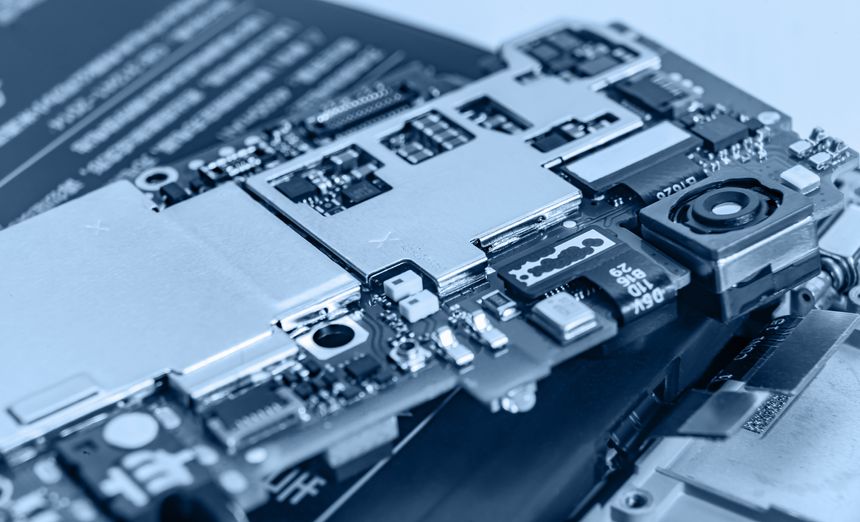
We live in an era where "silicon" is more than just an element on the periodic table—it’s the heartbeat of our modern world. From the AI-driven chip in your pocket to the safety systems in your electric vehicle, semiconductors are the literal foundation of 21st-century life.
But there is a hidden challenge. To make these chips work, we have to achieve a level of purity that borders on the impossible. This is where ICP (Inductively Coupled Plasma) Analysis enters the scene.
The "Dust Speck" Disaster
To understand why we test, we have to look at the scale. Modern transistors are measured in nanometers. For perspective, a human hair is about 80,000 to 100,000 nanometers wide.
In the world of semiconductors, a single atom of the wrong metal—like Iron, Copper, or Sodium—is like dropping a boulder into a delicate clockwork mechanism. If these "impurities" find their way onto a silicon wafer, the entire chip fails. This isn't just a minor glitch; it can lead to:
Reduced Battery Life: "Leaky" transistors drain power.
System Crashes: Ghost signals caused by metallic interference.
Product Recalls: Massive financial hits to the tech giants we rely on.
Enter the Plasma: How ICP Works
How do you find a needle in a haystack when the needle is the size of an atom? You vaporize the haystack.
ICP-MS (Mass Spectrometry) and ICP-OES (Optical Emission Spectrometry) are the gold standards of the industry. Here’s the "simple" version of the science:
The Torch: We take a sample (like the ultrapure water or chemicals used to wash the chips) and inject it into a plasma torch that is as hot as the surface of the sun (roughly 10,000°C).
The Breakdown: At these temperatures, the sample is torn apart into individual ions.
The Fingerprint: Every element emits a unique light signature or has a specific mass. The machine "sees" these signatures and can tell us exactly what—and how much—is in there.
Purity Beyond Imagination
In the semiconductor industry, we don't talk about "99% pure." We talk about Parts Per Trillion (ppt).
To give you an idea of what one part per trillion looks like:
It is equivalent to one second in 32,000 years, or a single drop of ink in 20 olympic-sized swimming pools.
ICP analysis allows manufacturers to ensure that the chemicals, gases, and water used in fabrication meet these insane standards.
Why Care?
You might never see an ICP-MS instrument in person, but you benefit from it every single day.
Sustainability: By catching impurities early, we reduce "wafer scrap," meaning less electronic waste and more efficient use of energy.
Innovation: We can’t build smaller, faster, or more powerful AI chips without the precision that ICP testing provides.
Safety: In medical devices and autonomous driving, "good enough" isn't an option. Purity equals reliability.
The next time you video call a loved one or use GPS to find a new restaurant, remember the silent, high-heat science of ICP analysis. It’s the invisible gatekeeper making sure the digital world stays clean, fast, and functional.
To learn more, connect with one of our Intertek experts!
/Passle/5e4a7839abdfeb03584d01f6/MediaLibrary/Images/2026-03-31-21-45-54-751-69cc4092bd1f61a396ba5dbf.png)
/Passle/5e4a7839abdfeb03584d01f6/SearchServiceImages/2026-10-15-20-52-56-997-6ad13d285c647470665fe605.jpg)
/Passle/5e4a7839abdfeb03584d01f6/MediaLibrary/Images/2026-09-03-20-12-26-473-6a99d4aab11f9687508d5b0a.png)
/Passle/5e4a7839abdfeb03584d01f6/SearchServiceImages/2026-09-04-22-12-18-466-6a9b4242f67b2e9362bccbfa.jpg)