


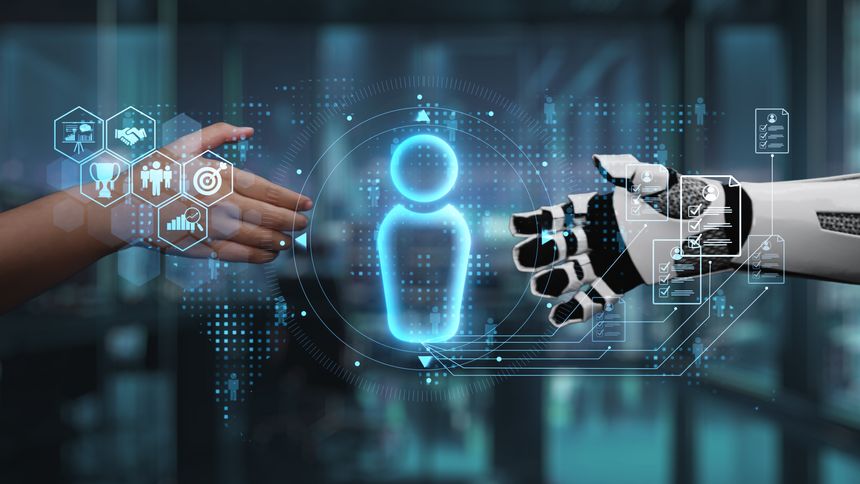
Artificial intelligence is rapidly reshaping industrial automation. Robots are no longer limited to executing pre‑programmed tasks inside tightly controlled cells. Instead, AI‑enabled robots are starting to perceive, adapt, and make decisions in real time, allowing them to operate with greater flexibility, autonomy, and collaboration across modern production environments.
The IEC’s e‑tech article AI robots in industrial automation highlights this shift clearly: intelligence is no longer peripheral to automation, it is becoming central to how industrial robots function.
For safety and assurance professionals, this evolution raises a critical question:
How do we assure safety, reliability, and compliance when robot behaviour is no longer fully deterministic?
From Repeatability to Adaptability
Traditional industrial robots were valued for one defining feature: repeatability. Safety validation relied on predictable motion paths, fixed operating envelopes, and clearly defined fault states.
AI‑enabled robots change this equation. According to the IEC, AI allows robots to:
- Interpret sensor data dynamically
- Adjust behaviour based on context
- Learn from operational data
- Collaborate more closely with humans and other machines
This adaptability unlocks productivity and flexibility, but it also introduces behavioural variability, which must be addressed through new assurance approaches.
Why AI Changes the Assurance Problem
In an AI‑driven robot, safety risks are no longer confined to hardware failures or software bugs. They may arise from many different sources. The misclassification of objects or humans, may result in actions that are hazardous to humans, but would have been suitable for other objects. Unexpected interactions between perception and control logic can result in hallucinations of the system. Finally, learning processes that evolve system behaviour after deployment, which may result in original validations and verifications no longer being valid for the lifetime of the equipment.
Unlike traditional automation, an AI‑enabled robot can behave differently under similar conditions depending on data quality, environmental changes, or system updates.
This is why standards and conformity assessment are becoming more important - not less - as industrial automation grows more intelligent.
Human–Robot Collaboration Raises the Stakes
One of the most visible impacts of AI is the expansion of collaborative robotics. AI improves humanoid recognition, motion planning, and contextual awareness, enabling robots to operate closer to people.
But closer interaction also means:
- Higher risk exposure
- Reduced physical separation
- Increased reliance on perception accuracy and reaction time
Assurance must therefore consider how robots interpret humans, not just how they detect them.
Standards are addressing the required safety levels by requiring AI to meet requirements around Trust, Safety, Transparency, Interoperability, and Responsible development.
These concepts are no longer abstract. They directly influence whether AI‑enabled robots can be safely deployed at scale.
Standards as Enablers of Safe Scale
A common misconception is that standards slow innovation. The IEC takes the opposite view: standards are what allow AI robotics to scale responsibly across global markets.
Without harmonized standards and credible conformity assessment:
- AI behaviour becomes difficult to benchmark
- Safety claims become subjective
- Interoperability breaks down
- Trust erodes - with regulators, customers, and workers
The IEC’s work alongside ISO and national committees reflects a growing consensus:
AI‑driven automation needs structured guardrails to move from experimentation to industrial infrastructure.
How Intertek Supports Assurance for AI‑Enabled Robotics
As robots become intelligent systems rather than fixed machines, Intertek’s services evolve alongside them.
Intertek supports manufacturers, integrators, and operators through:
- AI² - Demonstrating Smarter, Safer, and Trusted AI systems
- System‑level risk assessment for AI‑enabled behaviour
- Validation of safety functions influenced by perception and decision logic
- Review of human–robot interaction scenarios
- Conformity assessment aligned with applicable IEC and ISO standards
- Lifecycle assurance that accounts for software and model change over time
The goal is not to limit intelligence; but to ensure it remains safe, predictable, and trustworthy in real industrial environments.
Intelligence Demands Stronger Assurance
AI‑enabled robots represent one of the most powerful shifts in industrial automation in decades. They promise flexibility, efficiency, and collaboration, but they also redefine what “safe” means.
The future of AI robotics depends on standards, trust, and credible assurance frameworks that grow alongside intelligence.
In this new era, assurance is no longer a final gate at the end of development. It becomes an ongoing discipline; supporting innovation while ensuring that intelligent machines remain safe partners in industrial systems.
/Passle/5e4a7839abdfeb03584d01f6/MediaLibrary/Images/2026-03-31-21-45-54-751-69cc4092bd1f61a396ba5dbf.png)
/Passle/5e4a7839abdfeb03584d01f6/SearchServiceImages/2026-10-15-20-52-56-997-6ad13d285c647470665fe605.jpg)
/Passle/5e4a7839abdfeb03584d01f6/MediaLibrary/Images/2026-09-03-20-12-26-473-6a99d4aab11f9687508d5b0a.png)
/Passle/5e4a7839abdfeb03584d01f6/SearchServiceImages/2026-09-04-22-12-18-466-6a9b4242f67b2e9362bccbfa.jpg)