

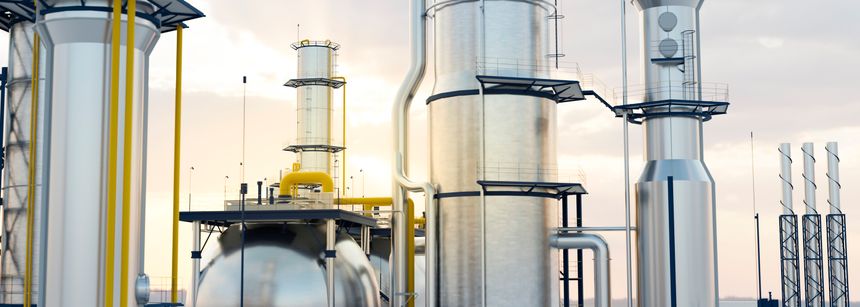
Advanced recycling is moving quickly from pilot scale to industrial reality. ExxonMobil recently reported that its third advanced recycling unit in Baytown, Texas is now operational, lifting Baytown’s capacity to process up to around 250 million pounds of plastic waste annually. The company also states it is on track to reach approximately 450 million pounds of annual advanced recycling capacity across its global facilities by year-end 2026.
That scale is significant, but it also raises a practical technical question that applies across recycling pathways: how do you maintain material confidence when inputs and outputs can vary?
Scale changes the challenge
At higher throughput, variability becomes more visible and more consequential. Recycled plastics can arrive as complex mixtures with:
Mixed polymer types and blend ratios
Legacy additives, fillers, inks, and residual catalysts
Trace metals and elemental contaminants
Volatile and semi-volatile compounds that can affect odor, stability, and process behavior
Degradation markers that influence performance over time
Even when “recycled plastic” is treated as a single category, the reality is a wide range of chemical fingerprints. Those fingerprints influence processing windows, quality consistency, and end-use suitability.
Why characterization matters for recycled plastics programs
Whether the goal is to improve incoming feedstock control, troubleshoot process variability, or evaluate output quality, material characterization becomes the basis for decision-making.
In practice, robust recycled plastics programs increasingly depend on repeatable analytical insight to:
Confirm polymer identity and composition
Screen for contaminants and legacy chemistries that can create risk
Assess processing suitability and performance implications
Generate data that supports consistent quality expectations across batches and suppliers
As advanced recycling capacity grows, this measurement layer becomes a bridge between circular ambition and real-world material performance.
With this addition, Baytown has the capacity to process up to ~250 million pounds of plastic waste annually.
How Intertek supports this
As advanced recycling scales from pilot to industrial reality, consistent measurement becomes the foundation of credible circularity. Intertek supports organizations with comprehensive recycled plastics analysis, combining polymer identification, contaminant screening, degradation assessment, migration studies, and performance evaluation to turn material variability into actionable insight. Intertek’s premier chemical and materials testing laboratory at Allentown has completed qualification testing and has become an approved feedstock testing lab for large, recycled polymer processors in the industry.
Learn more at https://www.intertek.com/polymers-plastics/recycled-plastics/
/Passle/5e4a7839abdfeb03584d01f6/MediaLibrary/Images/2026-03-31-21-45-54-751-69cc4092bd1f61a396ba5dbf.png)
/Passle/5e4a7839abdfeb03584d01f6/MediaLibrary/Images/2026-09-03-20-12-26-473-6a99d4aab11f9687508d5b0a.png)
/Passle/5e4a7839abdfeb03584d01f6/SearchServiceImages/2026-09-04-22-12-18-466-6a9b4242f67b2e9362bccbfa.jpg)
/Passle/5e4a7839abdfeb03584d01f6/MediaLibrary/Images/2026-09-04-00-16-53-479-6a9a0df5b6215d2dde2b7c7b.png)