

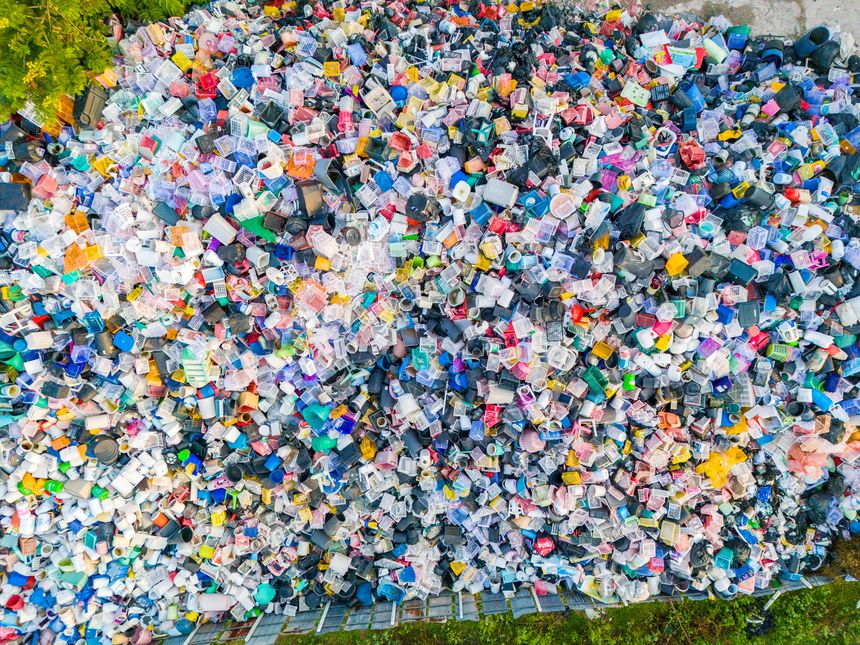

Plastic waste is increasingly being viewed not as an environmental liability, but as a strategic resource within the circular economy. In her recent Forbes article, Dianne Plummer explores how advances in recycling and material conversion technologies are enabling plastic waste to be transformed into high-value materials for industrial use. By recovering the underlying chemical and carbon value of plastics, organisations can reduce dependence on virgin fossil resources while strengthening supply chain resilience.
A key enabler of this transition is pyrolysis. Through controlled thermal processing in the absence of oxygen, mixed plastic waste can be converted into pyrolysis oil, a versatile feedstock that can be refined into fuels, chemicals, or new plastics. Pyrolysis oil plays a critical role in closing the loop, allowing waste plastics to re-enter the value chain as a secondary raw material rather than being landfilled or incinerated.
As regulatory pressure and sustainability targets accelerate, confidence in the quality, consistency, and traceability of pyrolysis oil is becoming essential. Robust testing and verification are required to ensure these materials are fit for purpose and support genuine circular outcomes.
This is where Intertek Caleb Brett supports the industry, providing independent testing and inspection services for pyrolysis oil to help organisations unlock value from waste while advancing a more circular, sustainable materials economy. Learn more at intertek.com.
/Passle/5e4a7839abdfeb03584d01f6/MediaLibrary/Images/2026-03-31-21-45-54-751-69cc4092bd1f61a396ba5dbf.png)
/Passle/5e4a7839abdfeb03584d01f6/SearchServiceImages/2026-10-15-20-52-56-997-6ad13d285c647470665fe605.jpg)
/Passle/5e4a7839abdfeb03584d01f6/MediaLibrary/Images/2026-09-03-20-12-26-473-6a99d4aab11f9687508d5b0a.png)
/Passle/5e4a7839abdfeb03584d01f6/SearchServiceImages/2026-09-04-22-12-18-466-6a9b4242f67b2e9362bccbfa.jpg)